Where There Is No Stage: Victoria Isaac, Her Violin, and the Care Homes of Chennai
Chennai (Tamil Nadu) [India], July 31: Most of Victoria Isaac’s violin is played in care homes, not concert halls. In June, the social impact of that work won her a Changemaker Award in Gurugram.
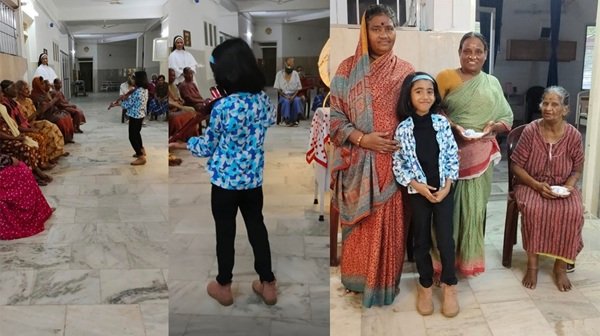
There is no stage. There are no lights, no backdrop, no LED wall. There is a corridor with a marble floor, plastic chairs set along one wall, and about twenty women in cotton saris sitting in them, some of them turned in their seats to see better. A sister from the home stands at the far end. In the middle of the floor, a nine-year-old in a blue-and-white jacket lifts a violin to her chin and begins to play.
This is where most of Victoria Isaac’s violin actually goes.
She is better known for the things that come with certificates. What she does on the average week does not come with any. She calls it Melodies of Memories, and it means going into senior care centres, palliative care centres and community halls and, when someone cannot get out of bed, into their room, and playing for them without charge.
The problem she picked
What Melodies of Memories is aimed at is not illness. It is the emptiness of the days.
Old age in a city like Chennai increasingly happens away from family. Residents in long-term care see the same few faces, eat at the same hours, and can go weeks with nothing much to mark one day off from the next. Music does not fix that. It does interrupt it, and it reaches people whose sight, memory or mobility have narrowed to the point where very little else does.
The catch is that somebody has to turn up. Care homes are not a booking anyone chases. There is no audience to win over, no photographer at the back, nothing waiting at the end of it. Victoria goes anyway, and has been going long enough that staff at some of the homes now know when to expect her.
When a resident cannot get out of bed, she plays in the room, for one person. It takes the longest, and her family says it is the part she will not have cut from a visit.
She wants it made into a foundation, under the name Music for Healing, and carried on until every senior care facility in the region has been covered. For now it runs on her own time and her parents’ time, and nothing else.
The other kind of room
Not all of it is old age. Part of the work is done in palliative care, among cancer patients, and those visits are a different proposition. Nobody there is short of company because their week is empty. Some of the people she plays for will not be there the next time she comes.
She goes anyway, into the ward or up to the bed, and plays the same way she plays anywhere else. Whether a nine-year-old belongs in rooms like that is a fair question, and her family has been asked it. Their answer has been that the patients are not frightening, only ill, and that a few minutes of live music costs the person in the bed nothing at all.
It is the least photogenic part of what she does, and the reason the initiative is named the way it is.
Recognition, two thousand kilometres away
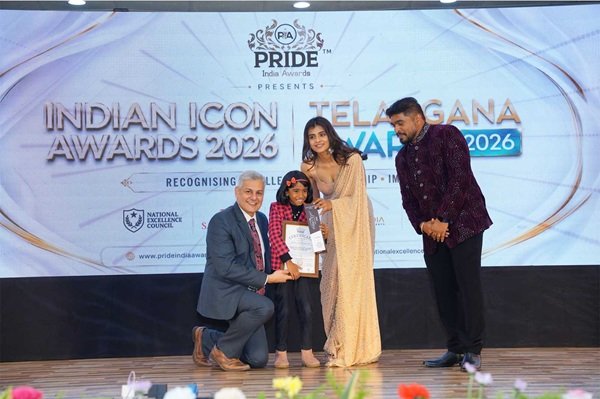
On 27 June 2026, in a ballroom at the DoubleTree by Hilton in Gurugram, Victoria was given a Changemaker Impact Award under the Heroes of Tomorrow Action Campaign, which is run in partnership with the United Nations and linked to the SDG Action Awards. The citation covers her social impact through music and names both Melodies of Memories and her civic work.
A ballroom in Haryana is a long way from a corridor in Chennai. The award is useful for a practical reason rather than a sentimental one, though. Music for Healing will need institutions to open doors, and a citation with the United Nations attached to it is the sort of thing that gets a letter answered.
Asking adults to vote
The second strand of her public work has nothing to do with care homes and everything to do with the same instinct.
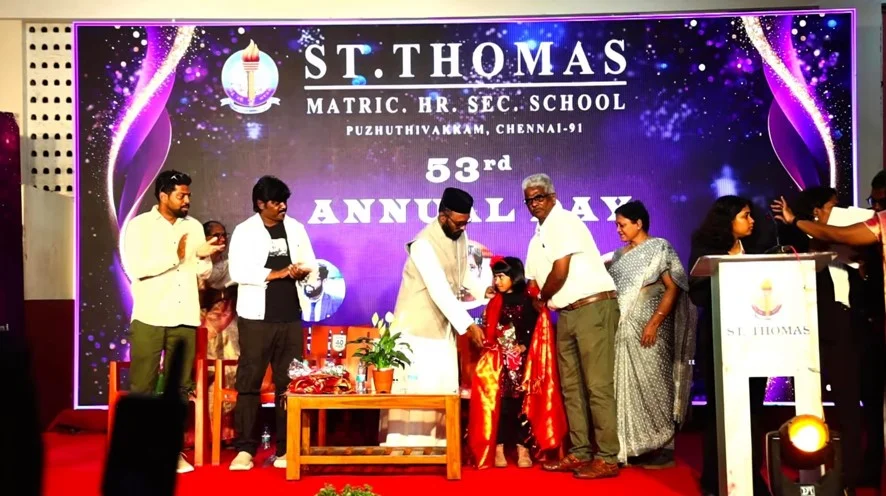
In April 2026 the Chengalpattu District Collectorate ran a voter-awareness campaign under the banner VOTE 100% CHENGELPATTU, ahead of the state elections. Victoria worked with the Collectorate and with District Collector Mrs. Malathi Helen, IAS, performing the Collectorate’s anthem live and appearing as the central performer in the official anthem video. She was honoured on stage during the campaign.
Put plainly: a nine-year-old who cannot vote until 2035 was asked by a district administration to persuade adults who can. Turnout drives usually reach for a film star or an official. Chengalpattu reached for a child with a violin and built the film around her.
Why it works is not complicated. There is nothing in it to argue with. There is a child, an instrument and a request.
What the two things have in common
Put the two side by side and a fairly plain idea about music shows through.
One takes it to people who have dropped out of public life. The other uses it to pull people back in. Neither needs her to be extraordinary. Both need her to show up.
She is nine. The foundation does not exist yet, there is no staff and no funding, and the plan is still only a plan. But the method is already there, and it needs nobody’s permission: go to a room where music is not expected, and play.